
The Importance of CPSC 16 CFR 1201 Compliance in a Wholesale Tempered Glass Panels Factory
QINHUANGDAO, HEBEI, CHINA, January 8, 2026 /EINPresswire.com/ -- As global construction, renovation, and infrastructure projects continue to expand, safety compliance has become a defining factor in the selection of building materials. Glass, once valued primarily for transparency and aesthetics, is now evaluated just as closely for its performance under impact and its behavior when breakage occurs. In this context, the role of a Wholesale Tempered Glass Panels Factory goes far beyond production capacity alone. Compliance with internationally recognized safety standards, including CPSC 16 CFR 1201, has become essential for manufacturers supplying tempered glass panels to global markets.
Tempered glass panels are widely used in architectural, residential, and commercial applications due to their enhanced strength and safety characteristics. Through a controlled heat-treatment process, tempered glass achieves significantly higher mechanical strength compared to ordinary annealed glass. When broken, it fractures into small, relatively blunt particles, reducing the risk of serious injury. These properties make tempered glass panels suitable for applications such as doors, partitions, railings, shower enclosures, facades, and other areas where human impact is possible.
Understanding CPSC 16 CFR 1201 and Its Industry Relevance
CPSC 16 CFR 1201 is a U.S. federal safety standard that evaluates the impact resistance and breakage behavior of architectural glazing materials. It is widely referenced in residential and commercial construction projects that export products to or are influenced by North American building regulations. The standard defines testing methods and performance criteria for safety glazing materials used in doors, windows, and other architectural installations.
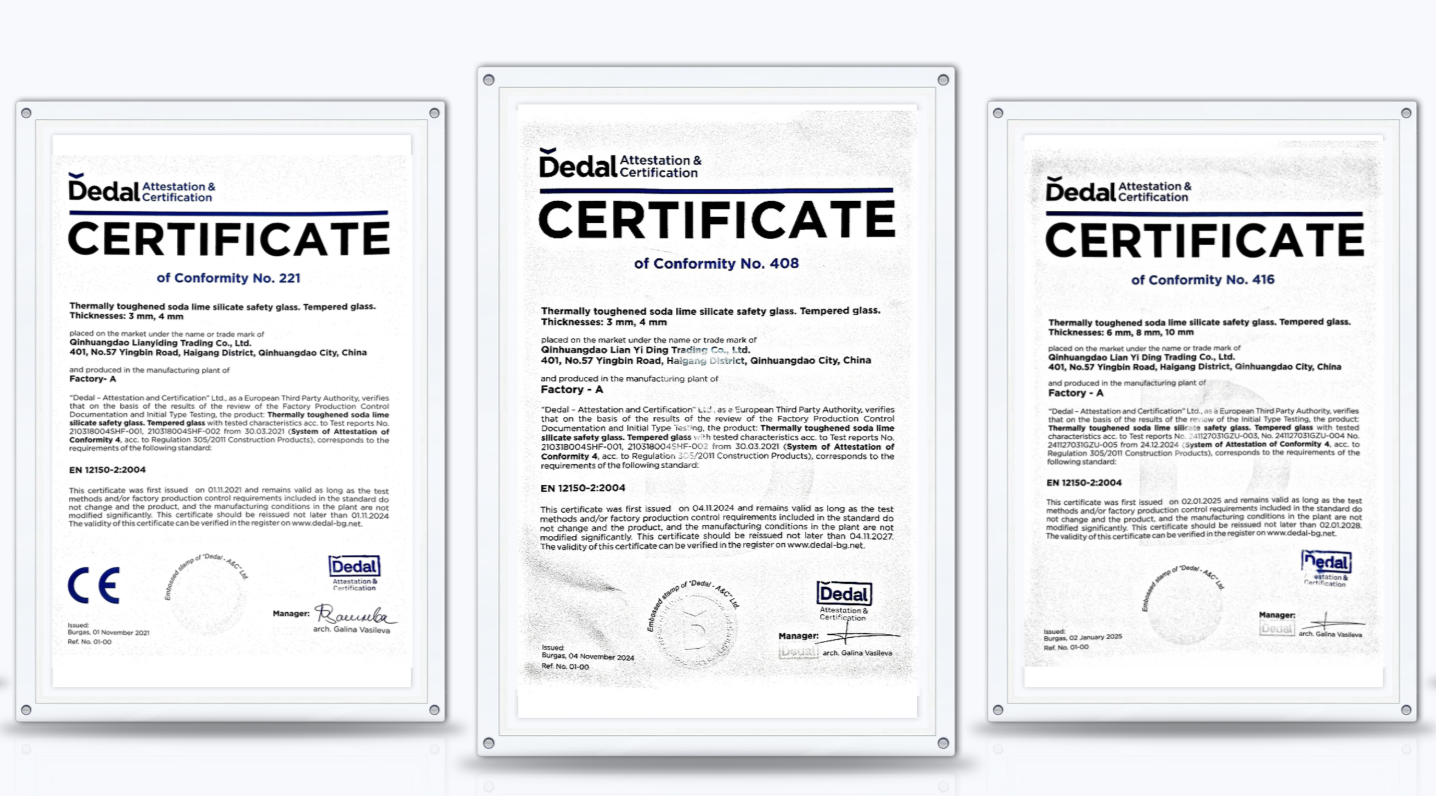
For a tempered glass panels factory, compliance with CPSC 16 CFR 1201 demonstrates that products have been tested under controlled impact conditions and meet defined safety thresholds. This compliance not only supports regulatory acceptance but also provides assurance to developers, architects, and distributors that the glass panels are suitable for real-world use where accidental impact may occur.
As international trade continues to grow, CPSC compliance has become relevant beyond the United States. Many global buyers reference U.S. safety standards when sourcing glass products, making compliance a practical requirement for suppliers serving multinational projects.
Market Trends Driving Demand for Certified Tempered Glass Panels
The global tempered glass market is influenced by several long-term trends. Urbanization, high-density housing, and modern architectural design have increased the use of large glass surfaces in both residential and commercial buildings. At the same time, safety expectations have risen as regulations tighten and end users become more aware of risk mitigation.
In response, tempered glass panels are increasingly specified not only for their strength but also for their certified safety performance. Buyers now seek manufacturers that can provide consistent quality, traceable testing, and compliance documentation alongside product supply. For wholesale factories, this shift emphasizes the importance of standardized production processes and alignment with recognized safety benchmarks.
Tempered Glass Panels: Product Scope and Applications
Tempered glass panels encompass a wide range of products differentiated by thickness, size, edge treatment, and processing methods. Common thicknesses range from 4mm to 19mm, depending on application requirements. Panels may be clear, tinted, patterned, or processed further through lamination or coating, depending on project needs.
In architectural applications, tempered glass panels are used for building facades, curtain walls, railings, and balcony enclosures, where wind load resistance and safety performance are critical. In interior environments, they are applied in shower enclosures, glass doors, partitions, and furniture, where frequent human contact increases the importance of impact resistance.
Specialized applications include sports facilities, pool fencing, and commercial storefronts, where compliance with safety standards such as CPSC 16 CFR 1201 is often specified during project planning and approval.
Manufacturing Considerations for Compliance
Achieving CPSC 16 CFR 1201 compliance requires more than final product testing. It involves control across the entire manufacturing process, including raw material selection, cutting accuracy, edge finishing, tempering uniformity, and quality inspection.
Glass flatness and surface integrity directly influence tempering outcomes. Precise cutting and smooth edge grinding reduce stress concentration points that could compromise performance during impact testing. Uniform heating and cooling during tempering are essential to achieve consistent strength and predictable breakage behavior across glass panels.
Quality control systems play a central role in ensuring compliance. Regular inspection, batch tracking, and sample testing help maintain consistency, particularly in wholesale operations supplying large volumes to multiple markets.
LYD GLASS and Tempered Glass Panel Production
LYD GLASS operates in Qinhuangdao, a coastal city in northern China with a strong foundation in glass manufacturing. The company benefits from its proximity to Qinhuangdao Port and convenient access to Tianjin Port, offering efficient transportation solutions for international business. This advantageous geographical position supports stable export operations and helps reduce logistics costs for overseas customers.
Within its tempered glass portfolio, LYD GLASS supplies a broad range of tempered glass panels designed for architectural and industrial applications. These products are manufactured with attention to dimensional accuracy, surface quality, and safety performance, supporting their use in projects where compliance with standards such as CPSC 16 CFR 1201 is required.
Application Scenarios and Global Project Use
Tempered glass panels produced for wholesale distribution are integral to a wide array of construction and renovation projects around the world. For façade applications, clear tempered glass is frequently used in curtain walls and storefronts, where large glazed surfaces enhance daylighting and visual transparency. Architects specify tempered glass with precise thicknesses to meet design loads and safety criteria; for example, 10mm and 12mm panels may be chosen for multi-story building facades to offer both structural integrity and refined aesthetics.
In urban residential developments, tempered glass is widely used for balcony enclosures and railings. Frameless glass balcony systems provide unobstructed views while delivering resistance to dynamic loads from wind and human activity. Tempered glass railing panels also appear in indoor staircases and atrium balustrades, where compliance with safety standards such as CPSC 16 CFR 1201 is essential to minimize injury risk and satisfy building code requirements.
Commercial interior projects frequently deploy tempered glass panels in office partition systems, conference room walls, and storefront displays. Clear glass partitions help create collaborative workspaces with visual openness, while maintaining acoustic separation. Tempered glass doors within these systems provide access control and safety performance in high-traffic areas. In hospitality projects, tempered glass panels are used in spa enclosures, restaurant partitions, and bathroom shower areas, where frequent maintenance and human contact heighten the importance of selecting safety-enhanced materials.
Specialized industrial environments also benefit from tempered glass panels. In manufacturing and cleanroom facilities, tempered glass windows and partition panels help maintain controlled environments while offering visibility and impact resistance. Similarly, in transportation hubs such as airports and train stations, tempered glass is used in waiting areas, ticketing counters, and display installations where safety and durability are paramount.
Outdoor recreational facilities, such as sports arenas and pool enclosures, rely on tempered glass solutions that combine transparency with impact resistance. Tempered pool fencing provides a visually appealing boundary that meets both safety standards and aesthetic expectations. Sports court enclosures integrate tempered glass panels that withstand dynamic forces from play activities, supporting both athlete safety and spectator visibility.
In each of these application scenarios, compliance with standards like CPSC 16 CFR 1201 is a crucial element in project specification. Buyers often require documentation of testing and performance to ensure that tempered glass panels will behave predictably under impact conditions and meet regulatory demands in their respective markets.
Logistics, Packaging, and Supply Chain Reliability
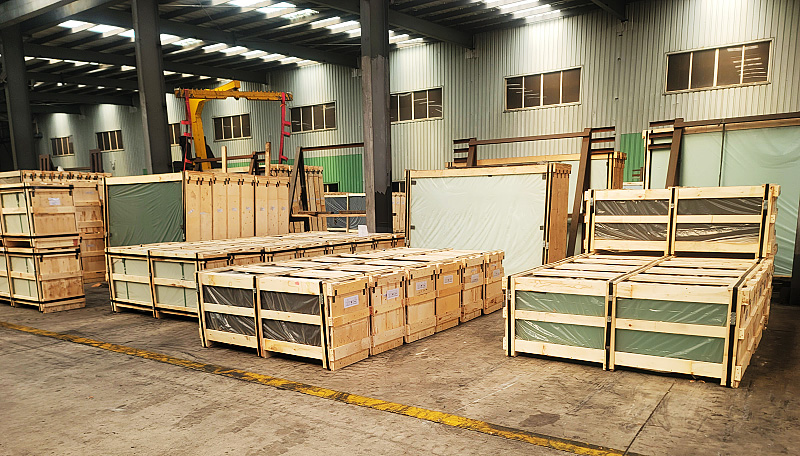
For glass products, compliance does not end at production. Transportation and handling also affect product integrity. Wholesale tempered glass panels must be packaged to minimize vibration, impact, and environmental exposure during transit.
LYD GLASS’s location near major export ports supports efficient logistics planning. Reduced inland transportation distances and access to established shipping routes contribute to more predictable delivery schedules. These factors are especially relevant for large glass panels, where damage risk increases with each handling stage.
Long-Term Value of Compliance for Buyers and Suppliers
From a buyer’s perspective, sourcing from a factory that aligns with CPSC 16 CFR 1201 requirements reduces regulatory risk and simplifies project approval processes. It also supports consistent safety performance across installations, which is critical for liability management and long-term building operation.
For manufacturers, compliance strengthens market credibility and expands access to international projects. It reflects an investment in process control, testing capability, and technical understanding—attributes that are increasingly valued in the global glass supply chain.
Conclusion
CPSC 16 CFR 1201 compliance has become an important benchmark in the global tempered glass industry, particularly for manufacturers supplying wholesale tempered glass panels to international markets. As safety expectations rise and regulations evolve, factories that integrate compliance into their production processes are better positioned to meet market demand.
Through its tempered glass panel offerings and export-oriented manufacturing base in Qinhuangdao, LYD GLASS aligns with the practical requirements of global construction and architectural projects. By supporting safety performance, dimensional accuracy, and supply reliability, the company contributes to the responsible use of tempered glass panels in modern built environments.
For more information, please visit https://www.lydglass.com/.
Tempered glass panels are widely used in architectural, residential, and commercial applications due to their enhanced strength and safety characteristics. Through a controlled heat-treatment process, tempered glass achieves significantly higher mechanical strength compared to ordinary annealed glass. When broken, it fractures into small, relatively blunt particles, reducing the risk of serious injury. These properties make tempered glass panels suitable for applications such as doors, partitions, railings, shower enclosures, facades, and other areas where human impact is possible.
Understanding CPSC 16 CFR 1201 and Its Industry Relevance
CPSC 16 CFR 1201 is a U.S. federal safety standard that evaluates the impact resistance and breakage behavior of architectural glazing materials. It is widely referenced in residential and commercial construction projects that export products to or are influenced by North American building regulations. The standard defines testing methods and performance criteria for safety glazing materials used in doors, windows, and other architectural installations.
For a tempered glass panels factory, compliance with CPSC 16 CFR 1201 demonstrates that products have been tested under controlled impact conditions and meet defined safety thresholds. This compliance not only supports regulatory acceptance but also provides assurance to developers, architects, and distributors that the glass panels are suitable for real-world use where accidental impact may occur.
As international trade continues to grow, CPSC compliance has become relevant beyond the United States. Many global buyers reference U.S. safety standards when sourcing glass products, making compliance a practical requirement for suppliers serving multinational projects.
Market Trends Driving Demand for Certified Tempered Glass Panels
The global tempered glass market is influenced by several long-term trends. Urbanization, high-density housing, and modern architectural design have increased the use of large glass surfaces in both residential and commercial buildings. At the same time, safety expectations have risen as regulations tighten and end users become more aware of risk mitigation.
In response, tempered glass panels are increasingly specified not only for their strength but also for their certified safety performance. Buyers now seek manufacturers that can provide consistent quality, traceable testing, and compliance documentation alongside product supply. For wholesale factories, this shift emphasizes the importance of standardized production processes and alignment with recognized safety benchmarks.
Tempered Glass Panels: Product Scope and Applications
Tempered glass panels encompass a wide range of products differentiated by thickness, size, edge treatment, and processing methods. Common thicknesses range from 4mm to 19mm, depending on application requirements. Panels may be clear, tinted, patterned, or processed further through lamination or coating, depending on project needs.
In architectural applications, tempered glass panels are used for building facades, curtain walls, railings, and balcony enclosures, where wind load resistance and safety performance are critical. In interior environments, they are applied in shower enclosures, glass doors, partitions, and furniture, where frequent human contact increases the importance of impact resistance.
Specialized applications include sports facilities, pool fencing, and commercial storefronts, where compliance with safety standards such as CPSC 16 CFR 1201 is often specified during project planning and approval.
Manufacturing Considerations for Compliance
Achieving CPSC 16 CFR 1201 compliance requires more than final product testing. It involves control across the entire manufacturing process, including raw material selection, cutting accuracy, edge finishing, tempering uniformity, and quality inspection.
Glass flatness and surface integrity directly influence tempering outcomes. Precise cutting and smooth edge grinding reduce stress concentration points that could compromise performance during impact testing. Uniform heating and cooling during tempering are essential to achieve consistent strength and predictable breakage behavior across glass panels.
Quality control systems play a central role in ensuring compliance. Regular inspection, batch tracking, and sample testing help maintain consistency, particularly in wholesale operations supplying large volumes to multiple markets.
LYD GLASS and Tempered Glass Panel Production
LYD GLASS operates in Qinhuangdao, a coastal city in northern China with a strong foundation in glass manufacturing. The company benefits from its proximity to Qinhuangdao Port and convenient access to Tianjin Port, offering efficient transportation solutions for international business. This advantageous geographical position supports stable export operations and helps reduce logistics costs for overseas customers.
Within its tempered glass portfolio, LYD GLASS supplies a broad range of tempered glass panels designed for architectural and industrial applications. These products are manufactured with attention to dimensional accuracy, surface quality, and safety performance, supporting their use in projects where compliance with standards such as CPSC 16 CFR 1201 is required.
Application Scenarios and Global Project Use
Tempered glass panels produced for wholesale distribution are integral to a wide array of construction and renovation projects around the world. For façade applications, clear tempered glass is frequently used in curtain walls and storefronts, where large glazed surfaces enhance daylighting and visual transparency. Architects specify tempered glass with precise thicknesses to meet design loads and safety criteria; for example, 10mm and 12mm panels may be chosen for multi-story building facades to offer both structural integrity and refined aesthetics.
In urban residential developments, tempered glass is widely used for balcony enclosures and railings. Frameless glass balcony systems provide unobstructed views while delivering resistance to dynamic loads from wind and human activity. Tempered glass railing panels also appear in indoor staircases and atrium balustrades, where compliance with safety standards such as CPSC 16 CFR 1201 is essential to minimize injury risk and satisfy building code requirements.
Commercial interior projects frequently deploy tempered glass panels in office partition systems, conference room walls, and storefront displays. Clear glass partitions help create collaborative workspaces with visual openness, while maintaining acoustic separation. Tempered glass doors within these systems provide access control and safety performance in high-traffic areas. In hospitality projects, tempered glass panels are used in spa enclosures, restaurant partitions, and bathroom shower areas, where frequent maintenance and human contact heighten the importance of selecting safety-enhanced materials.
Specialized industrial environments also benefit from tempered glass panels. In manufacturing and cleanroom facilities, tempered glass windows and partition panels help maintain controlled environments while offering visibility and impact resistance. Similarly, in transportation hubs such as airports and train stations, tempered glass is used in waiting areas, ticketing counters, and display installations where safety and durability are paramount.
Outdoor recreational facilities, such as sports arenas and pool enclosures, rely on tempered glass solutions that combine transparency with impact resistance. Tempered pool fencing provides a visually appealing boundary that meets both safety standards and aesthetic expectations. Sports court enclosures integrate tempered glass panels that withstand dynamic forces from play activities, supporting both athlete safety and spectator visibility.
In each of these application scenarios, compliance with standards like CPSC 16 CFR 1201 is a crucial element in project specification. Buyers often require documentation of testing and performance to ensure that tempered glass panels will behave predictably under impact conditions and meet regulatory demands in their respective markets.
Logistics, Packaging, and Supply Chain Reliability
For glass products, compliance does not end at production. Transportation and handling also affect product integrity. Wholesale tempered glass panels must be packaged to minimize vibration, impact, and environmental exposure during transit.
LYD GLASS’s location near major export ports supports efficient logistics planning. Reduced inland transportation distances and access to established shipping routes contribute to more predictable delivery schedules. These factors are especially relevant for large glass panels, where damage risk increases with each handling stage.
Long-Term Value of Compliance for Buyers and Suppliers
From a buyer’s perspective, sourcing from a factory that aligns with CPSC 16 CFR 1201 requirements reduces regulatory risk and simplifies project approval processes. It also supports consistent safety performance across installations, which is critical for liability management and long-term building operation.
For manufacturers, compliance strengthens market credibility and expands access to international projects. It reflects an investment in process control, testing capability, and technical understanding—attributes that are increasingly valued in the global glass supply chain.
Conclusion
CPSC 16 CFR 1201 compliance has become an important benchmark in the global tempered glass industry, particularly for manufacturers supplying wholesale tempered glass panels to international markets. As safety expectations rise and regulations evolve, factories that integrate compliance into their production processes are better positioned to meet market demand.
Through its tempered glass panel offerings and export-oriented manufacturing base in Qinhuangdao, LYD GLASS aligns with the practical requirements of global construction and architectural projects. By supporting safety performance, dimensional accuracy, and supply reliability, the company contributes to the responsible use of tempered glass panels in modern built environments.
For more information, please visit https://www.lydglass.com/.
QinHuangDao LianYiDing Glass CO.,LTD
+ +86 13315367306
info@dingsen-industry.com
Visit us on social media:
Instagram
X
Other
Legal Disclaimer:
EIN Presswire provides this news content "as is" without warranty of any kind. We do not accept any responsibility or liability for the accuracy, content, images, videos, licenses, completeness, legality, or reliability of the information contained in this article. If you have any complaints or copyright issues related to this article, kindly contact the author above.

